Posts

Open Space

Image
Open Space logo We already benefit from open source software, open hardware, open robotics, open datasets, even open CPUs — built through the work of many individuals. Could openness someday extend to space tech as well? Open spacecraft designs? Habitats? If openness transformed computing, could it also transform space? This is a future-looking idea, or question, may we someday be able to download, say, even open spaceship designs or other space tech the way we download open software or hardware designs now? https://djoffe.com/space/  explores this idea. Open Space github repo  

How to Maximize the Chance of Human Survival?

I firmly believe in working towards a true Star Trek-like ‘post-scarcity utopia’—a society where food and housing production are maximally automated and distributed. Such advancements could potentially enable high levels of wealth and leisure for everyone. Imagine a world where scarcity is a concept of the past, and every individual has access to the resources they need to thrive. However, achieving such a utopia is no small feat. The system required to maintain this level of automation and abundance would be enormously complex, technologically speaking. It would depend heavily on a network of technologies (some complex and themselves dependent on complex networks, like semiconductor manufacturing), as well as on stable economic and political frameworks, all of which must function seamlessly together. The more intricate the system, the more potential points of failure it has, making it vulnerable to disruptions. Now, let's ponder some catastrophic scenarios. Imagine the Yellowston...

Rules of Reason

 Rules of Reason  ->

English - Dutch Humor Dictionary created by ChatGPT

Image
Humorous English - Dutch Mini-Dictionary created by/using ChatGPT Possibly the first online dictionary created by/with AI's GPT Created with TLex's new integrated OpenAI functionality. New 3 Oct 2023: New article on this work by Prof Dr Gilles-Maurice de Schryver: " Generative AI and Lexicography: The Current State of the Art "   Images by David Joffe

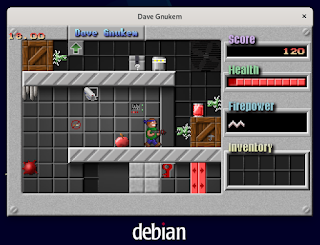
DaveGnukem Debian and Ubuntu packages etc.

Image
Packages for Debian, Ubuntu etc. for Dave Gnukem ... :) https://packages.debian.org/bookworm/davegnukem https://packages.ubuntu.com/lunar/davegnukem Thanks to Matteo Bini for major contributions to get this happening, as well as the many others who have contributed More/future: repology: davegnukem   (and alternative package spelling:  repology: dave-gnukem )

Stopping Aging

Some thoughts on aging. Aging seems to me 'unnecessary'. Imagine all the benefits if we could cure aging, and have lifespans of over 1000 years. If we had 1000-year+ lifespans, journeys to other stars that may take e.g. 'hundreds' of years would suddenly seem reachable 'within a human lifespan'. I see curing aging as ultimately "just" a (big, complex) technological problem to solve. A big complex puzzle with lots of pieces, but a solvable puzzle. A very big, complex and difficult problem to solve (to be sure) - but I feel it must be solvable. Our bodies are ultimately just machines. Really complex machines. And solvable possibly potentially within most of our lifespans, if we try. Attitudes like "Oh, we are just meant to age" seem like confounders to progress toward solving these problems - we could solve it faster if more people dedicated attention to it instead of simply assuming it's unsolvable, or adopting irrational quasi-religious v...

On disorders and fear of being alone

Consider what we call "disorders" - many of them, of course, are genuinely maladaptive. But some appear only contextually maladaptive and perhaps even beneficial in other contextual circumstances. Consider, for example, the fear of being alone (autophobia) - frequently classified as a disorder. Of course, there are symptoms (or traits) that may be maladaptive, particularly in modern society - i.e. that negatively affect the person who has it, and that the person may need relief from these. But consider that for much of the last 5 or 10 million years of our evolutionary history, our way of life was probably largely relatively approximately something between modern hunter-gatherer societies, and the way the chimps in the documentary Rise of the Warrior Apes lived (and still live) - frequently in dangerous conflict with neighboring tribes. Likewise our last common ancestor with the chimps. In these societies in which our ancestors lived, finding yourself lost and alone from your...